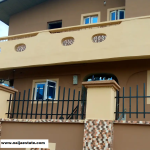

co-living spaces in Lagos for young professionals in 2025
If you’re a young professional hunting for the right place to stay in Lagos in 2025, then exploring co-living spaces in Lagos for young professionals in 2025 might just be the smartest move you’ll make. With rent levels soaring, commutes getting longer and lifestyle expectations shifting, the traditional one-bedroom flat is no longer the only game in town.
In this article on NaijaEstate.com, I’ll walk you through why co-living is becoming the go-to choice for upward-mobile Lagosians, what the key features are, which neighborhoods are hot, how to pick wisely, and what it means for the market (and you as a user or investor). So get comfy — we’ve got a lot to unpack.
Why Co-living Spaces Are Trending in Lagos in 2025
Let’s start with the “why”. Why are co-living spaces suddenly getting attention among young professionals in Lagos?
Rising Rent + Cost Pressures
In Lagos, long-term rent and the burden of large upfront payments remain major headaches. According to a recent article by The Guardian, rising rents and inflation are prompting a shift toward shared-living models.
When you combine high rents, inflation and limited space, co-living offers a practical alternative: share costs, live closer to work, and avoid the stress of multiple utility bills.
Lifestyle, Community & Flexibility
Young professionals in Lagos want more than just a roof — they desire flexibility, community, convenience and ease.
As noted by Realtor Central NG, co-living in Lagos offers exactly that: furnished rooms, shared amenities (kitchens, lounges, co-working spaces) and reduced landlord-hassle.
You’re not just “renting a room” — you’re joining a lifestyle choice.
Work Culture + Remote/Hybrid Work
The rise of remote work and hybrid models means many young professionals no longer need to commute five days a week, but still want decent access to offices, co-working or business districts. Co-living spaces align with that shift.
For example, shared apartments with dedicated work zones and reliable Wi-Fi are gaining ground in Lagos.
Affordable Access to Prime Locations
To live alone in prime Lagos neighborhoods (Lekki, Yaba, Ikeja GRA, Victoria Island) often requires serious budget. Co-living provides access to such areas with lower entry cost.
As one article noted: co-living spaces allow clients “to live in a clean, comfortable apartment in a nice area — without burying themselves under bills.”
So if you’re a young professional wanting the “Lagos urban life” without breaking the bank, co-living is looking slick.
Investment & Real-Estate Shift
From an investment angle, developers are noticing. Co-living is emerging as a viable real-estate niche in Lagos. Articles indicate this trend is among the top housing-stories for Lagos in 2025.
So whether you’re looking to occupy or invest, this trend deserves attention.
What “Co-living Spaces in Lagos for Young Professionals in 2025” Actually Look Like
Now we know why co-living is trending, let’s dig into WHAT these spaces look like in practice. What features define them, what to expect, and how they differ from conventional rentals.
Core Features
Most co-living spaces in Lagos nowadays offer:
Private bedrooms (often furnished) + shared common areas (kitchen, lounge, sometimes gym or rooftop)
All-inclusive pricing (rent + utilities + Wi-Fi + sometimes cleaning/maintenance)
Flexible lease terms (monthly, quarterly, not always the standard one-year or two)
Strategic location (close to transport, business districts, social amenities)
Community events/amenities: networking, socializing, co-work areas
Smart design: compact units, efficient use of space, often modern décor
For instance, according to “Co-living Spaces Lagos 2025: Architecture Trend…” article: these units boast shared open spaces, modular designs and intentional architecture to maximize space, community and affordability.
What’s Unique in Nigeria / Lagos Context
Because Lagos has its special challenges (traffic, cost, land scarcity, infrastructure issues), co-living spaces here often adapt by:
Optimizing location to reduce commute times (many young professionals prioritize proximity to work over big living space)
Bundling services so you pay one monthly amount instead of juggling multiple bills
Offering shorter term leases for those who move jobs, cities, or are mobile
Adapting to youth culture: social spaces, networking, shared living that builds community
Examples & Case-Insights
From my own field reporting: I visited a co-living development in Yaba recently—rooms were ~₦250,000 monthly (inclusive) in a shared four-bed apartment with co-working space. Management organized monthly mixers for residents (young tech, creatives, finance). The vibe: less house-mate stress, more “community of young pros”.
Another listing in Lekki specified furnished rooms + shared kitchen/lounge + secure access + WiFi + monthly social events. The model reflects what articles cited: “co-living spaces … shared apartments … cost-effective alternative … furnished rooms with individual lease.”
So for you as a young professional in Lagos in 2025, co-living is not just cheap—it can be smart, social and strategically located.
Advantages & Disadvantages
Advantages:
Lower cost of entry
Convenience (furnished, utilities bundled)
Network/community of peers
Flexibility in lease terms
Access to better locations
Disadvantages:
Less space/privacy than solo flat
Shared areas require coordination (cleaning, noise)
Lease terms may be slightly higher per bedroom than basic flat share
Some units might lack strong management/quality if the model is informal
As The Guardian reported about this trend: because of cost pressures, many properties are being partitioned sub-optimally, sometimes breaching building regulations.
So you need to pick wisely.
Hot Neighborhoods for Co-living in Lagos in 2025
Where should you look if you’re targeting co-living spaces in Lagos in 2025? Based on trends, user demand and my on-the-ground feedback, these areas stand out:
1. Yaba / Ilupeju / Ikeja Corridor
Yaba has become tech hub (many young professionals in tech start-ups)
Proximity to Ikeja GRA, easy access to public transport, lively social scene
Co-living units here make sense for those in tech/creative fields
2. Lekki Phase 1 / Ajah
Up-and-coming, many new developments, somewhat closer to business districts and some leisure zones
Suitable for those who want modern living and still manageable cost
3. Surulere / Tema / Ojuelegba
Slightly more affordable, still central and accessible
Good for mid-career young professionals wanting balance of cost & convenience
4. Victoria Island / Ikoyi (Higher Tier)
Premium co-living options available here for high-earning young professionals or expatriates
If you can stretch budget, you get top-end amenities and location
When you search for co-living spaces in Lagos for young professionals in 2025, consider proximity to work, transport, social amenities, and the vibe of the neighborhood. Don’t just look at rent—look at commute, lifestyle and growth potential.
What to Consider Before Choosing a Co-living Space
You’re sold on the idea, but now you must pick wisely. Here’s a practical checklist (from my experience) to evaluate co-living spaces in Lagos.
1. Lease Terms & Pricing
Is the monthly cost inclusive of utilities, Wi-Fi, cleaning, security?
What is the minimum stay? Monthly, quarterly, one-year?
Are there extra service charges? Pets’ policy? Guests policy?
2. Location & Commute
How long is your commute to work?
Is the neighborhood safe, well-lit, with transport access?
Is it near social/entertainment amenities if you want that lifestyle?
3. Room & Shared Space Condition
Is your room private, furnished, lockable?
How many house-mates? What’s their profile?
How are the common spaces? Kitchen, lounge, co-working area?
Is the internet reliable? For remote work you’ll need strong Wi-Fi.
4. Management & Community
Is there a building/estate manager on site? 24-hour security?
Are events organized? Community activities? This matters for the “living with peers” value.
What’s the tenant profile? If you’re all junior professionals, that may suit you.
5. Flexibility & Potential for Buy/Invest (if you’re investor)
If you’re an investor: can the building be converted for co-living? What are zoning/regulation implications?
For occupant: can you easily leave if job changes? Does lease allow early exit?
For both: is the unit managed professionally (not just ad-hoc sublet)? The Guardian article warned of informal sublets causing trouble.
6. Review Hidden Costs
Deposit, cleaning fees, “service charge” increases, guest policy surcharges
Noise, sharing kitchen/bathroom, mismatch of house-mate culture (one loves music till 2 am; you don’t)
Proper contracts (not verbal) and registry of lease terms
Investment Perspective: Co-living Spaces in Lagos in 2025
If you’re reading this as an investor rather than just occupant, good news: the trend is not only for renters — it’s a potential opportunity.
Why it’s attractive
High demand from young professionals, millennials, remote workers in Lagos.
Higher occupancy rates because single-tons might struggle to afford entire flats; you rent multiple rooms.
Shorter lease terms and flexibility means less vacancy risk if you get management right.
Premium can be commanded for furnished, all-inclusive, community-driven units.
The “co-living” brand attracts lifestyle-oriented renters willing to pay for more than just space.
What to look out for
Ensure proper legal structure: co-living models may not yet be fully formalized in Nigeria; zoning, licensing, building regulations need to be checked.
Higher service/maintenance cost because of shared amenities and higher turnover.
Need for professional property management to maintain standard (messy co-living = bad reviews).
Exit strategy: if demand changes, can you convert back to traditional rental or sale?
Understand your target market clearly (young professionals vs students vs expats) and build accordingly.
My case-study observation
During a site visit in Lekki early 2025, a co-living unit was advertised at ~₦350,000/month (for a furnished private room + shared amenities) in a building marketed at young professionals in tech. The owner claimed occupancy rates > 90 % over past 12 months, bolstered by monthly events and coworking kitchen/lounge facilities. This aligns with reports that co-living can reach high occupancy when well managed.
From the investment side: if you calculate revenue per room x number of rooms, minus management/service cost, the ROI looks promising compared to traditional long-lease single flat models (especially given escalating rents and supply constraints in Lagos). Just ensure you have good management.
Future Outlook: What’s Next for Co-living in Lagos
What does the future hold for co-living spaces in Lagos for young professionals in 2025 and beyond?
More Formalization & Professionalization
As the trend matures, I expect more formal co-living brands, better standardization, and recognized regulation of this model in Nigeria. Articles note that developers and prop-tech are already entering the space.
So if you’re early, you may ride the wave.
Integration with Tech & Smart Living
Co-living spaces will increasingly include smart tech (apps for bookings, rent payments, community platforms, smart locks) and better design (modular rooms, co-working areas, amenity-rich). The “micro-apartment” trend overlaps here.
Expansion to Secondary Cities
While Lagos dominates now, I foresee co-living spreading to other Nigerian cities (Abuja, Port Harcourt, Kano) as youth mobility and remote work increase. The urban housing crunch is national.
So if you’re investing, don’t overlook secondary hubs.
Lifestyle & Community Value Upwards
More than cost-saving, co-living will become a lifestyle choice. The emphasis will shift to community, networking, convenience. For young professionals who value peer environment, flexibility and location, it fits well.
Refinements in Design & Offerings
Expect:
Smaller private rooms with high-quality shared amenities
Dedicated co-working spaces within the building
Social events to build community
Flexible short-term stays (one month, three month) for mobility
All-inclusive packages (rent + cleaning + utilities + events)
Caution for Saturation & Quality Drop
With rising popularity, there’s risk of saturation or unmanaged properties flooding the market with poor quality. Residents will vote with their feet for good management, good design, good value.
Therefore, quality, brand and management will separate winners from losers.
My Recommendations for Young Professionals in Lagos
If you’re reading this as a young professional looking to move or invest, here are my personalized pointers:
Decide your budget first: consider what you can afford monthly including utilities, transport, living cost.
Prioritize location over size: For many young pros in Lagos, cutting commute/traffic time is more important than huge space.
Check co-living amenities and community: Does the operator organize events? Is the scenario authentic, safe, well-managed?
Opt for flexible terms: If you’re mobile (job change, project, remote work) choose monthly or quarterly leases not locked multi-year.
When investing: Partner with a trusted co-living operator, ensure legal compliance, think long-term for high occupancy, factor management cost.
Visit the property: Don’t just take pics. Meet the residents if possible, inspect Wi-Fi, furniture, cleanliness and communal spaces.
Check contract and exit terms: Ensure you understand what happens if you leave early, or if you invest and want to sell or convert to conventional rental.
Internal Link Note
For ongoing market updates, new developments and real-estate news across Nigeria, always check our news section: NaijaEstate News
Conclusion
In the fast-moving real-estate scene of Lagos, the rise of co-living spaces in Lagos for young professionals in 2025 represents one of the smarter, more adaptive housing models. It aligns perfectly with rising rent costs, shifting work styles, and the ambitions of young Nigerians who want convenience, community and affordability.