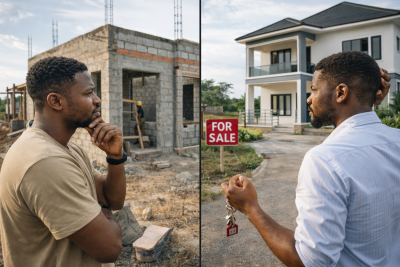
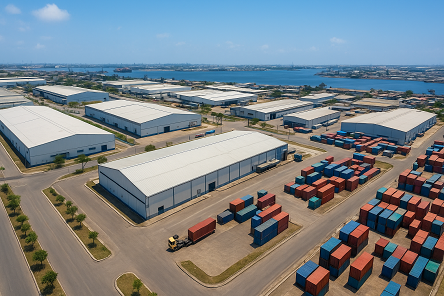
industrial warehouse plots in Lagos as investment in 2025
Imagine securing a piece of land in Lagos that doesn’t just gather dust, but actually powers your investment portfolio. That’s the promise behind industrial warehouse plots in Lagos as investment in 2025 — we’re talking about land zoned for warehouses, logistics hubs and industrial use, in Nigeria’s most dynamic economic engine. In this article on NaijaEstate.com, I’ll walk you through what these plots are, why they matter now, the hotspots, how to evaluate them, the risks and the rewards. If you’re thinking beyond residential houses and apartments, and you want something deeper, longer-term and strategic — read on.
By the end you’ll be able to ask the right questions, spot opportunities and avoid common mistakes when exploring industrial land in Lagos.
Let’s dive in.
Why Invest in Industrial Warehouse Plots in Lagos in 2025?
Rising demand for industrial warehousing
With Nigeria’s import/export business, manufacturing revival and logistics chain expansion, warehousing space in Lagos is under pressure. A report by the Punch shows “warehouse rents surge on strong demand” in Lagos. When rental rates for warehouses go up, the value of the land underpinning them rises too.
Strategic infrastructure and industrial zones
Lagos has major industrial/port-adjacent zones — Lekki Free Trade Zone, Ogba Industrial Estate, Apapa, among others. In a piece titled “Top 10 Industrial Areas in Lagos for 2025” these zones were highlighted as key for investor attention. What that means: land in or near these zones, especially zoned for warehousing/industrial use, is more likely to appreciate.
Lower competition (for now) in this niche
While residential land remains highly competitive and overheated, the niche of industrial warehouse plots is less crowded (especially for investor buy-land-hold strategies). That gives potential for early entry, better pricing and higher upside.
Long-term structural shifts
Industrial land investment is less speculative than residential in some ways: you’re tapping into logistics, manufacturing, supply-chain — sectors that may outperform in tougher economic cycles. As one analysis put it: Nigeria’s industrial real‐estate market is projected to grow above 8% over five years. So, those willing to hold for 5-10 years stand a chance to benefit meaningfully.
Identifying the Right Zones: Where to Buy Warehouse Plots in Lagos
When someone lands on the phrase industrial warehouse plots in Lagos as investment in 2025 they’re looking for which areas, why, how much. Here are the zones I recommend, with local tone and context.
Zone 1: Apapa / Apapa‐Oshodi Expressway Corridor
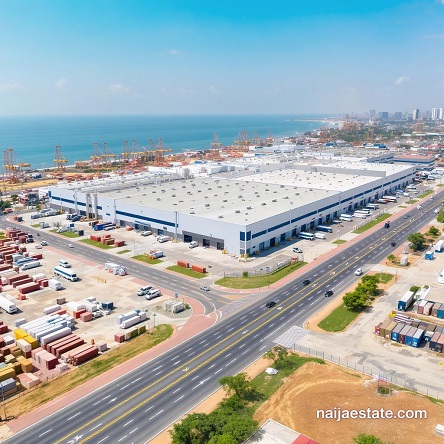
This area is tied to Nigeria’s major seaport infrastructure and container logistics. The 2025 industrial-areas list puts Apapa very high.
Why it matters: Access to port, high logistics demand, limited land supply.
What to check: Land must have industrial zoning, good truck access, C of O or equivalent, and good drainage (the area is prone to flooding).
Investment note: Entry cost is high, but long-term upside strong.
Zone 2: Ikeja / Ogba Industrial Estate & Mainland Hubs
Ikeja (including Ogba) is a more mature industrial hub, with road networks and existing warehousing. The “Top 10 Industrial Areas” list identifies Ikeja as prime.
Why it matters: Proximity to Lagos Mainland, established infrastructure.
Investment note: Potentially slightly lower upside than brand-new zones, but lower risk too.
Zone 3: Lekki Free Trade Zone / Ibeju-Lekki Corridor
The zone around the Lekki Free Trade Zone is increasingly becoming industrial/logistics heavy. Land prices here are rising. For example, news on “Lagos Deep Sea Port real estate” shows Ibeju-Lekki land near logistics nodes offering ~20% ROI.
Why it matters: Future-oriented, high potential growth, some infrastructure still emerging.
Investment note: Requires patience, maybe 5-10 year horizon.
Zone 4: Emerging Peripheral Areas (Badagry, Ikorodu, Amuwo Odofin)
Smaller but growing industrial zones like Badagry and Amuwo Odofin are also listed.
Opportunity: Lower entry cost, growth potential if infrastructure improves.
Risk: Bigger infrastructure risk, may take longer to appreciate.
Entry Costs and Price Signals for Warehouse Plots
To invest, you must know ballpark numbers and what to look out for.
From industrial land listings in Lagos: the average price of industrial land for sale is around ₦1,500,000,000 (for large plots) according to listings of 50+ such lands.
Warehouse prices (which include a building) are also in the multi-billion naira range in Lagos.
Construction cost for warehouse/industrial buildings is estimated between ₦150,000 to ₦200,000 per square metre in 2025 in Lagos.
What this tells you
To acquire “warehouse plots” you’re often looking at land of multiple hectares or large plot sizes, and multi-billion naira range.
If you are purely buying the land (to hold) rather than building now, you might find smaller plots or peripheral zones with lower cost but higher risk.
Always benchmark: “Is the price consistent with what similar plots in that zone are selling for?”
Remember that infrastructure (road, drainage, truck access, power) dramatically affects value and desirability.
My Field Insight
In conversation with a logistics company rep, I learned that truck-accessible land with dual road frontage near Apapa is commanding around ₦3-4 billion for plots in excess of 4,000 sqm. Meanwhile smaller or further plots might start at ₦600-700 million. These figures correspond with listing portals. This shows the range is wide — but you must know your scale and risk appetite.
What to Check Before You Buy Warehouse/Industrial Plots
Here’s a checklist tailored to industrial warehouse plots in Lagos as investment in 2025 — drawn from my experience in the field.
✅ Documentation & Title
Ensure proper zoning: The land must be designated for “industrial” or “warehouse/logistics” use, not just “residential”.
Certificate of Occupancy (C of O) or Governor’s Consent or appropriate industrial title: Many industrial lands still on “consent” or “lease”.
Survey plan registered: Confirm plot sizes, boundaries, road setbacks.
Check for encumbrances: liens, litigations, pending suits.
Confirm developer/owner credentials if buying from a developer.
✅ Infrastructure & Physical Factors
Road access: Can trucks gain easy access for loading/unloading? What is the road condition?
Power supply: Industrial plots often need stable power; check nearest sub-station or whether power is reliable.
Drainage/flood risk: Lagos has water/logistics hubs near water; ensure plot is not prone to frequent flooding.
Proximity to major nodes: Port (Apapa), Free Trade Zone (Lekki), expressways.
Security, environment: Warehouse/logistics hubs often locate with specific security/clearance needs.
✅ Market & Demand Dynamics
Speak to existing warehouse operators: Are they fully occupied? Are there vacancy issues?
What is the rental level for warehouses in that zone now? (E.g., surge in warehouse rents seen in Lagos. )
What infrastructure or policy changes are coming? Are there upcoming new roads, rail access, port expansions?
What is the hold period and exit strategy? Industrial land is less liquid than residential, so plan longer term.
✅ Costs & Holding Considerations
Holding costs: Even without development you will pay taxes, security, maintenance.
Building costs if you plan to build: Use the per-square-metre guide.
Opportunity cost of tying up big capital.
Risk of longer hold if infrastructure lags.
✅ Investment Strategy Fit
Are you buying to hold/flip? Or to build/use income-producing asset?
If you plan to lease the land or building, is there existing demand?
What is your risk appetite— high potential with emerging zone vs lower risk but mature zone?
Case Study: Exploring a Warehouse Plot Option in Lekki Free Trade Zone
Here’s a brief case from my field work in Lagos in mid-2025.
I visited a developer marketing 4 hectares of industrial land inside the Lekki Free Trade Zone (near the upcoming deep-sea port). They presented the following:
Fully sand-filled land, fenced, ready for development, dual access roads.
Title: Leasehold through trade-zone concession (to be verified).
Price: ~₦1.8 billion for the 4 hectares (which translates to ~₦45 million per 1,000 sqm).
Developer projected that once the port and Free Trade Zone generate more logistics traffic, demand for warehouse/industrial land in that zone would increase 20-30% over next 2-3 years (based on infrastructure announcements). This aligns with the port-driven land-ROI study in Ibeju-Lekki.
From my walk-through: good infrastructure, visible neighboring development, but also still some “green field” risk (construction of roads not fully done yet). If you buy this plot, you’re banking on the infrastructure being completed on schedule. If delays occur, your hold period may extend.
What I learned:
Timing matters a lot. If you buy early (pre-infrastructure), your upside might be higher — but so is risk.
Ensure you have clarity on zoning, title, access roads and truck access before paying deposit.
Have a realistic exit horizon: 3-5 years is optimistic; 5-10 years may be safer for industrial land.
Potential Returns & Time-Horizon Realities
When dealing with industrial warehouse plots in Lagos as investment in 2025, what kind of return can you expect? Realistic outcomes vary, but here are some general observations:
Appreciation: With premium zones, you might target 15-30% upside per year if infrastructure, demand and supply align. For example, land near major logistics nodes rising on port announcements.
Income generation: If you develop warehouse and lease it, you get rental income which can make a return even before major appreciation.
Medium-to-long term hold: 5–10 years is more realistic than 1–2 years. Land in emerging zones often needs time for full infrastructure and demand to catch up.
Liquidity: Industrial land parcels are less liquid than residential; you may need to wait for right buyer.
Risk premium: With higher reward comes higher risk – delays, cost overruns, regulatory changes.
In the Nigerian context, the guide for “profitable real‐estate investment types in Nigeria today” emphasis matching investment type with time-horizon, strategy and risk.
So if you’re going into warehouse plots, go in with your eyes open and a clear plan.
What Could Go Wrong? Risks to Monitor
No investment is without risk, especially one with the scale of industrial land. Here are key risks for this niche:
Infrastructure delays: If roads, utilities, access are delayed, the land may stagnate.
Title/documentation issues: Industrial land may have more complex zoning and approvals.
Oversupply down the road: If many warehouse plots/developments crowd the zone, rental yield or appreciation may dip.
Transport/traffic bottlenecks: If access remains poor, logistics players won’t bite.
Holding cost inflation: Your cost to hold (taxes, security, sand-fill, fencing) eats into returns.
Economic downturn: Manufacturing or import/export slow-down could reduce demand for warehouse space.
Exit risk: Selling or leasing may take longer than expected.
But good news: many of these risks can be mitigated by due diligence, good documentation, strong location and realistic hold horizon.
Steps to Take If You’re Considering Buying Warehouse Plots in Lagos
Here’s a recommended roadmap from my experience:
Define your objective: Are you buying to hold land only, or to develop warehouse and earn rent?
Research zones: Use the zones above (Apapa, Ikeja/Ogba, Lekki FTZ, etc) and visit physically.
Check title & zoning: Hire a real estate lawyer and surveyor. Confirm industrial zoning, C of O/lease, no litigation.
Assess infrastructure: Look at access roads, truck entry, power availability, drainage, finishing.
Benchmark pricing: Compare per-sqm cost in that zone, check listings (see industrial land listings).
Draft business case: Estimate cost of land, holding cost, development cost (if any), time horizon, expected appreciation/rental yield.
Ensure exit strategy: Understand how you can sell or lease later; consider liquidity.
Inspect documentation chain & seller credentials: Especially if buying from developer or primary seller.
**Negotiate and structure: **Try for phased payment, escrow arrangements, guarantee that infrastructure will be completed.
Prepare for hold: Have buffer capital for holding costs and contingencies.
Why This is the Right Time (2025-Specific)
2025 is looking like a tipping year for industrial land in Lagos. Here’s why:
Urbanisation, manufacturing and logistics expansion mean greater demand for warehouse and industrial spaces. Nigeria’s industrial real-estate market is expected to grow above 8%.
Infrastructure momentum: port expansions, free trade zones, expressway upgrades are creating growth corridors.
Supply crunch: Many industrial zones are near capacity or constrained; thus new land/plots have premium value.
Investors looking beyond residential: as residential market becomes saturated/competitive, investors are shifting to commercial/industrial niches.
Early-entry advantage: Peripheral or emerging zones still offer better pricing compared to mature zones.
As many 2025 market forecasts for Nigeria real-estate note: this year may be a “first mover” opportunity.
Therefore if you act based on insight (and not hype), you may benefit.
Summary & Key Takeaways
Industrial warehouse plots in Lagos as investment in 2025 is a niche with strong potential: driven by logistics, infrastructure, industrialization and supply constraints.
Key zones: Apapa/Oshodi corridor, Ikeja/Ogba, Lekki Free Trade Zone/Ibeju-Lekki, peripheral hubs like Badagry/Amuwo.
Entry cost is high and requires serious capital, but the upside (appreciation + rental potential) is compelling.
Must check zoning, title, infrastructure, demand and have a hold strategy.
Time horizon: more likely 5–10 years, not quick flip in 1-2 years (unless you find rare opportunity).
Risks exist, but can be managed via proper due-diligence and professional advice.
2025 is a good entry point if you act intelligently — getting in early gives you better room for upside.
Conclusion
If you’re ready to move beyond traditional residential investment and you’ve got the capacity and patience, investing in industrial warehouse plots in Lagos in 2025 might well be one of the smarter strategic plays in Nigerian real-estate right now. Whether you’re holding land today, developing tomorrow, or simply buying for future flood of logistics and manufacturing demand — the key is to buy location, title, infrastructure and time.
As always on NaijaEstate.com we recommend you consult local professionals, verify documents, visit sites and don’t let FOMO drive your decision.