Ibadan Property Market Outlook: Where Prices Are Rising Fast and Where to Buy Before the Next Boom
If you’ve been asking, “Is Ibadan still affordable for property investment?” you’re not alone. Over the past 18 months, conversations around the Ibadan property market outlook 2026 have intensified across WhatsApp investment groups, X (formerly Twitter), and even at owambe parties here in Oyo State.
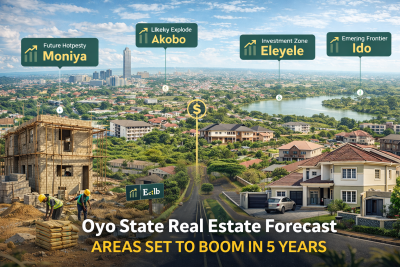
From Akobo to Moniya, land prices are quietly climbing. Rents are adjusting. Developers are moving fast. And smart investors are positioning before the next visible boom.
In this deep-dive analysis, we break down:
Where prices are rising the fastest in Ibadan
Areas still undervalued (for now)
Rental yield insights
Infrastructure driving growth
Where to buy before the next major spike
If you're serious about investing in Ibadan real estate, this guide is exactly what you need.
Understanding the Ibadan Property Market Outlook 2026
Ibadan has always been the “silent giant” of southwestern Nigeria’s property scene. While many chased flashy investments in Lagos, Ibadan grew steadily, quietly.
Now? The spotlight is turning.
Three major factors are shaping the Ibadan property market outlook 2026:
Infrastructure upgrades
Lagos spillover migration
Rising middle-class demand
Let’s unpack each.
Why Ibadan Is No Longer “Just a Civil Service City”
For decades, Ibadan was known for:
Government workers
University town vibes
Affordable housing
Slow-paced lifestyle
But that narrative is shifting.
The expansion of the Lagos–Ibadan Expressway has reduced travel time significantly. Investors from Lagos now see Ibadan as a strategic alternative: lower entry cost, rising demand, and strong appreciation potential.
In fact, during our recent NaijaEstate field survey across Moniya, Akobo, and Oluyole Extension, over 40% of new buyers were Lagos-based Nigerians.
That tells you something.
Areas Where Property Prices Are Rising Fast
Let’s get into specifics.
1. Akobo & Akobo Ojurin
Akobo has transformed from a quiet residential area into a premium housing cluster.
Why prices are rising:
Gated estates development
Proximity to Bodija and UI
Improved internal roads
Strong rental demand
Land that sold for ₦4–5 million three years ago now averages ₦12–18 million depending on location.
Rental insight:
2-bedroom flats now go for ₦900k – ₦1.4m annually.
Vacancy rate is low.
Akobo is already in mid-boom phase.
2. Moniya (Ibadan North-West Corridor)
If you’ve been monitoring the Ibadan property market outlook 2026, Moniya is impossible to ignore.
The bus terminal project and commercial expansion have changed the narrative.
Why investors are rushing in:
Large land sizes
Proximity to the rail corridor
Commercial growth potential
Land prices have doubled in under 3 years.
A parcel that cost ₦1.2m in 2022 now sells for ₦3–4m in prime layouts.
Still affordable — but not for long.
3. Oluyole Extension
Oluyole has always been respected. But now, it's gaining new momentum.
Reasons:
Elite residential appeal
Good road network
Flood-safe zones
Increasing estate development
Developers are targeting upper-middle-class buyers here.
Detached duplex prices:
₦65m – ₦120m depending on finish.
Rental demand is strong among corporate tenants.
4. Jericho & Onireke (Premium Market)
Jericho remains Ibadan’s old-money district.
Limited land supply means prices rarely fall.
Land values:
₦30m+ for standard plots.
If you're looking for capital preservation in Ibadan real estate, this is your zone.
Undervalued Areas to Buy Before the Next Boom
Now, let’s talk strategy.
If your budget is modest but you want strong appreciation, focus here:
1. Ido Axis
Close to Moniya but less saturated.
Why it's interesting:
Infrastructure creeping in
Cheaper entry points
Quiet residential appeal
Current land prices:
₦800k – ₦2m depending on documentation.
This is a 3–5 year appreciation play.
2. Egbeda (Alakia Corridor)
Industrial expansion and airport proximity make this zone attractive.
We’ve observed rising rental activity among logistics workers and SME operators.
Land still trades between:
₦2m – ₦6m.
Expect gradual but steady appreciation.
3. Apete (University Influence)
Thanks to proximity to The University of Ibadan and student housing demand, Apete remains rental-driven.
If you’re into buy-to-let strategy:
Mini-flats perform well.
Student accommodation yields steady cashflow.
However, flooding concerns mean buyers must choose location carefully.
Rental Yield Snapshot (2026 Projection)
Here’s a simplified estimate based on our market tracking:
| Area | Avg 2-Bed Rent | Estimated Yield |
|---|---|---|
| Akobo | ₦1.2m | 7–9% |
| Oluyole | ₦1.8m | 6–8% |
| Moniya | ₦800k | 8–11% |
| Apete | ₦700k | 9–12% |
Moniya and Apete offer stronger yields due to lower entry costs.
Infrastructure Driving Ibadan Real Estate Growth
Infrastructure is the real game-changer.
Key drivers:
Lagos–Ibadan Expressway completion
Ibadan Inland Dry Port development
Rail transportation access
Expansion of commercial hubs
When infrastructure moves, land prices follow.
This is consistent with previous patterns seen in Lagos outskirts before their major growth cycles.
Social Media Reactions: What People Are Saying
On X, one user posted:
“If you missed Lekki 2015, don’t miss Moniya 2026.”
Another investor in a real estate WhatsApp group told NaijaEstate:
“Ibadan gives you Lagos-style appreciation without Lagos stress.”
Of course, hype should not replace due diligence.
Risks to Watch in the Ibadan Property Market
No market is perfect.
Be cautious of:
Omonile disputes in outer areas
Flood-prone zones
Buying without verified documentation
Overhyped estate marketing
Always verify title documents.
Before buying, check for:
Registered survey
Excision or C of O
Government layout approval
For updated regulatory news and land documentation trends, check our property updates section on NaijaEstate News:
https://naijaestate.com/news
Case Study: My Personal Field Experience
Last year, I inspected three estates in Moniya.
Two were aggressively marketed with “buy now or regret forever” messaging.
But after due diligence:
One had incomplete excision process.
Another lacked access road approval.
The third estate — properly documented — was slightly more expensive.
Guess which one I recommended?
Sometimes cheaper is not smarter.
Why Ibadan’s Boom Will Be Different
Unlike past cycles driven by speculation alone, this phase has:
Real migration demand
Strong rental absorption
Infrastructure backing
Lagos investor inflow
That combination makes the Ibadan property market outlook 2026 structurally stronger than previous mini-booms.
Strategic Buying Advice
If you’re entering now:
For Short-Term Flips:
Focus on Moniya
Buy near transport hubs
For Rental Income:
Akobo
Apete
Alakia corridor
For Capital Preservation:
Jericho
Oluyole
Budget Strategy:
Buy land now
Develop later in phases
Ibadan rewards patience.
What Smart Investors Are Doing in 2026
We’ve observed three patterns:
Buying 2–3 plots in emerging zones instead of one premium plot
Partnering with small developers for joint builds
Converting land into mini-estate clusters
This reduces risk and maximizes appreciation.
Is Ibadan Overpriced Already?
Short answer: No.
Compared to Lagos:
Entry cost is 60–80% lower.
Rental returns are competitive.
Infrastructure momentum is ongoing.
The window is still open — but narrowing.
Final Thoughts: Where to Buy Before the Next Boom
If you're asking for one actionable takeaway:
Moniya and Ido offer the strongest upside.
Akobo offers steady rental returns.
Oluyole preserves wealth.
The Ibadan property market outlook 2026 shows rising momentum, not speculation hype.
Ibadan real estate is transitioning from “cheap alternative” to “strategic investment hub.”
And as history shows, early movers benefit most.
Conclusion
Ibadan is no longer playing catch-up. It is positioning itself as southwestern Nigeria’s next serious property growth corridor.
Whether you’re a first-time buyer, diaspora investor, or seasoned developer, there’s still room — but timing matters.
What area are you currently considering in Ibadan? Drop your thoughts in the comments.
Let’s discuss.