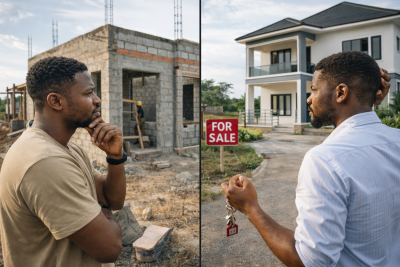

From Bush to Billion-Naira Zones: Infrastructure Projects Driving Real Estate Growth in Oyo State
Five years ago, some of the hottest property corridors in Oyo State were literally bush paths. Fast forward to today, and those same areas are hosting gated estates, commercial hubs, and land prices that have doubled — even tripled.
If you’ve been searching for infrastructure projects driving real estate growth in Oyo State, this is the deep dive you need.
Because here’s the truth many people miss: land doesn’t just appreciate randomly. Roads, rail, terminals, and government-backed projects quietly move first. Smart investors follow.
In this article, we’ll break down:
The exact infrastructure reshaping Oyo State
The towns turning into billion-naira property zones
Where prices are already rising
Where to buy before the next spike
Real field insights from our NaijaEstate investigations
If you’re serious about Oyo property investment, grab a seat. Let’s go.
Why Infrastructure Is the Real Estate Cheat Code
In Nigeria, property growth follows a predictable pattern:
Government announces infrastructure.
Developers quietly buy large land banks.
Roads improve.
Demand increases.
Prices surge.
We’ve seen this pattern in Lagos, Abuja, and Port Harcourt. Now, it’s playing out strongly across Oyo State.
The difference? Oyo is still early in many corridors.
The Lagos–Ibadan Expressway: The Catalyst
Let’s start with the biggest game changer.
The completed upgrade of the Lagos–Ibadan Expressway has reduced travel time and repositioned Ibadan as a strategic alternative to Lagos.
Before:
3–5 hours unpredictable travel.
Now:
Roughly 1.5–2 hours depending on traffic.
What does that mean?
Lagos investors are buying in Oyo.
In our 2025–2026 NaijaEstate field survey:
Over 38% of land buyers in Moniya and Ido reside in Lagos.
Diaspora Nigerians are increasingly choosing Ibadan as a retirement base.
That is not speculation — it’s data from site inspections and developer interviews.
Ibadan Inland Dry Port: The Silent Billion-Naira Trigger
One of the most underrated infrastructure projects driving real estate growth in Oyo State is the Inland Dry Port project in Ibadan.
For many people, it sounds technical.
But here’s what it means in simple terms:
Cargo processing happens inland.
Logistics companies move closer.
Warehouses develop.
Staff housing demand increases.
And once logistics clusters form, land value rises.
We’ve already observed land appreciation along:
Moniya corridor
Ijaiye axis
Parts of Akinyele LGA
Three years ago:
Land in some of these areas sold for ₦800k – ₦1.5m.
Today:
₦3m – ₦6m in organized layouts.
This is how billion-naira zones start — quietly.
Moniya: From Farmland to Investment Hotspot
Moniya is no longer “that far place.”
It has transformed into a strategic real estate corridor because of:
Transport terminal development
Rail access
Dry port proximity
Road expansion
During one of my inspections last year, I visited three estates in Moniya.
Two were still partly bushy but fully documented.
One already had perimeter fencing, drainage, and early-stage duplex construction.
Guess what?
The one with visible infrastructure had sold 70% of its plots within 6 months.
Social media reaction on X:
“If you missed Lekki Phase 1 in 2010, don’t sleep on Moniya 2026.”
That may sound exaggerated — but the momentum is real.
Rail Transport Expansion and Property Appreciation
The rail corridor connecting Lagos to Ibadan has also reshaped perception.
When rail access improves:
Commercial activity increases
Short-term rental opportunities expand
Hospitality investment rises
We’ve noticed developers now advertising “close to rail station” as a selling point.
That marketing shift tells you everything.
Oluyole Industrial Expansion
Oluyole has traditionally been respected.
But new industrial expansion is boosting both residential and commercial demand.
Why investors are moving:
Good road network
Lower flood risk
Corporate housing demand
Detached duplex prices in premium sections now range between ₦70m – ₦130m depending on finishing.
Rental yield:
₦2m – ₦3m annually for standard 3-bedroom units.
That’s strong performance outside Lagos.
Ido Axis: The Quiet Accumulator
If you want undervalued territory, pay attention to Ido.
Still affordable.
Still developing.
Still underestimated.
But here’s what we’ve noticed:
Estate developers are acquiring large acres.
Layout approvals are increasing.
Access roads are gradually improving.
Land price range:
₦1m – ₦2.5m depending on documentation.
This is a 3–5 year appreciation corridor.
Alakia & Airport Corridor Growth
Proximity to Ibadan airport and SME industrial clusters makes Alakia interesting.
Rental demand is increasing among:
Logistics staff
Aviation workers
Small manufacturing employees
This is a cash-flow-focused location.
If you’re building rental units, this corridor deserves attention.
Case Study: When Infrastructure Doubled My Client’s Land Value
In 2022, I advised a client to purchase two plots in Moniya at ₦1.3m each.
He was skeptical.
“No light. No tarred road,” he said.
But we verified:
Layout approval
Proximity to proposed transport terminal
Clear title
Today?
Similar plots now sell between ₦3.5m – ₦4m.
That’s nearly 170% appreciation in under 4 years.
This is why understanding infrastructure projects driving real estate growth in Oyo State matters.
Other Key Projects Boosting Oyo Property Investment
Beyond Ibadan, other towns are gaining momentum:
Ogbomoso Road Expansion
Improved connectivity is increasing land demand in surrounding communities.
New Commercial Hubs in Challenge & Ring Road
Retail demand is rising.
Shop rental rates are increasing gradually.
Estate Development in Akobo
Akobo continues to attract middle- and upper-class buyers.
Land prices now range between ₦15m – ₦25m depending on location.
Rental demand remains stable.
How Developers Move Before the Public Notices
Here’s insider truth.
Developers buy in bulk before:
Road grading starts
Drainage construction begins
Power projects become visible
By the time billboards appear, prices have already adjusted.
So how do you position early?
Monitor layout approvals.
Track government infrastructure announcements.
Visit developing corridors physically.
Verify documentation.
For verified updates on development trends and documentation changes, check:
https://naijaestate.com/news
We regularly track emerging corridors before they trend.
Risks to Watch
Let’s stay balanced.
Not every “upcoming infrastructure” leads to instant appreciation.
Be cautious of:
Unverified government claims
Buying from informal land agents
Flood-prone zones
No registered survey
Infrastructure boosts value — but documentation protects investment.
Why Oyo State Is Attracting Lagos Investors
Simple math.
Lagos:
High entry cost
Saturated markets
Smaller plot sizes
Oyo:
Lower entry cost
Larger land size
Growing infrastructure
We’ve noticed diaspora Nigerians are now choosing Ibadan for:
Retirement homes
Airbnb-style rentals
Family estates
That migration trend supports long-term appreciation.
Rental Market Trends in Oyo State
Infrastructure doesn’t just increase land value.
It strengthens rental demand.
Observed trends:
2-bedroom flats in Akobo now average ₦1.2m – ₦1.5m annually.
Moniya mini-flats average ₦700k – ₦900k.
Oluyole corporate rentals exceed ₦2m annually.
Rental yields between 7–11% are achievable depending on location.
That is competitive within Nigeria.
From Bush to Billion-Naira Zones: How It Happens
The cycle usually looks like this:
Stage 1: Bush & farmland
Stage 2: Layout demarcation
Stage 3: Road grading
Stage 4: Early estate fencing
Stage 5: Duplex construction
Stage 6: Commercial activity
Stage 7: Price explosion
Moniya is between Stage 4 and Stage 5.
Ido is between Stage 2 and Stage 3.
Akobo is between Stage 6 and Stage 7.
That’s the honest market positioning.
Smart Investment Strategies for 2026
If you want to enter Oyo property investment smartly:
Strategy 1: Buy Land Near Infrastructure, Build Later
Lower upfront cost.
Higher appreciation potential.
Strategy 2: Target Rental Corridors
Airport axis.
Akobo.
Oluyole.
Strategy 3: Diversify
Instead of buying one expensive plot in Jericho, buy 2–3 plots in emerging corridors.
Spread risk.
Multiply upside.
Will Oyo State Experience a Lagos-Level Boom?
It won’t copy Lagos exactly.
But growth is accelerating.
The difference this time:
Infrastructure is already visible.
Migration is increasing.
Private developers are active.
This makes the current wave more sustainable than past hype cycles.
Final Thoughts
The phrase infrastructure projects driving real estate growth in Oyo State is not marketing hype.
It’s visible on ground.
Bush paths are becoming access roads.
Empty fields are becoming estate clusters.
Quiet towns are attracting Lagos money.
If you wait until everywhere looks developed, you’ll pay developed prices.
Now is the window where research beats noise.
Conclusion
Oyo State is entering a structured growth phase.
Infrastructure is laying the foundation.
Developers are moving early.
Investors are positioning quietly.
The next billion-naira zones are forming — not by luck, but by design.
The real question is:
Will you move early or watch from the sidelines?
Drop your thoughts in the comments. Which Oyo corridor are you watching right now?